What Are Collaborative Combat Aircraft (CCA)?
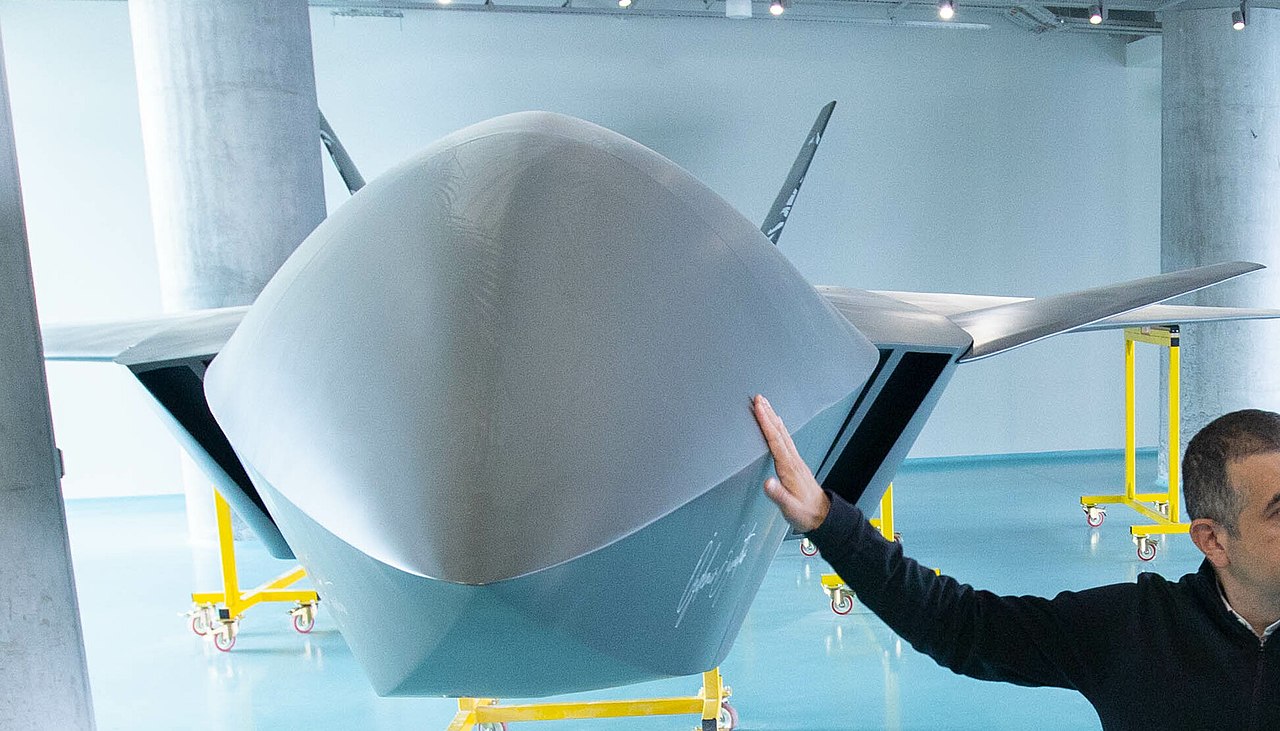
Collaborative Combat Aircraft (CCA) are autonomous, unmanned combat aerial vehicles (UCAVs) designed to fly alongside manned fighter jets in mixed formations. Rather than replacing human pilots, CCAs act as force multipliers — carrying extra missiles, extending sensor coverage, performing electronic warfare, and absorbing attrition in high-threat environments where losing a manned aircraft would mean losing a pilot.
The concept builds on manned-unmanned teaming: a human pilot in a fifth or sixth-generation fighter (such as the F-47 or NGAD) acts as a mission commander, directing a formation of two or more autonomous drones. The drones use AI to execute tactical tasks — navigating, avoiding threats, selecting targets — while the human retains authority over weapons release and major tactical decisions.
The UCAV Evolution: From Unmanned Combat Aerial Vehicles to Autonomous Wingmen
The UCAV (Unmanned Combat Aerial Vehicle) concept dates to the late 20th century, but early programs like the Boeing X-45 and Northrop Grumman X-47B were cancelled or scaled back as requirements shifted. For two decades, military drones were primarily reconnaissance and strike platforms — the MQ-9 Reaper, the RQ-4 Global Hawk — operating independently in permissive airspace, not flying alongside fighters in contested environments.
What changed was AI. Advances in machine learning, sensor fusion, and autonomous navigation made it feasible for a drone to operate in a formation, interpret a human commander's intent, and react to dynamic threats in real time. Simultaneously, the cost of manned fighters — the F-35 exceeds $80 million per unit — made attrition-based warfare economically unsustainable. The CCA concept addresses both problems: mass produced, lower-cost drones that can be risked in contested airspace.
How Loyal Wingman Drones Work
A loyal wingman drone operates through three core capability layers:
- Sensor fusion & data sharing: The drone carries its own sensors (radar, electro-optical, signals intelligence) and shares data with the manned fighter via secure datalinks. This gives the human pilot a wider sensor picture than any single aircraft could provide.
- Autonomous navigation & threat avoidance: AI enables the drone to navigate, maintain formation, and respond to threats (incoming missiles, enemy fighters) without continuous human input. The human sets objectives; the drone figures out how to execute.
- Weapons & payload: CCAs carry air-to-air missiles, air-to-ground munitions, or electronic warfare payloads. By offloading weapons from the manned fighter, the formation's total missile count increases dramatically — an F-35 with two loyal wingmen might carry 12+ missiles instead of 4.
The electronic warfare dimension is equally critical. CCAs can serve as electronic warfare platforms, jamming enemy radar, spoofing air defense systems, and creating a "sensor fog" that shields the manned fighter's approach. This makes CCAs essential to Suppression of Enemy Air Defenses (SEAD) missions.
Key CCA Programs & Platforms
Several major programs are shaping the CCA landscape as of 2026:
- U.S. Air Force CCA Program: The largest effort, with an initial tranche of at least 100 drones and plans for "thousands" over time. Multiple companies are competing, including Anduril (Fury), General Atomics, and Boeing. Unit cost target: $25–30 million.
- Boeing MQ-28 Ghost Bat (Australia): A loyal wingman drone developed for the Royal Australian Air Force, designed to operate alongside F-35s and F/A-18s. It features a modular nose section for swapping sensors and payloads.
- China's loyal wingman programs: China is developing unmanned combat aircraft to accompany J-20 and J-35 fighters, including the GJ-11 stealth UCAV and concepts for AI-enabled swarm carriers like the Jiutian.
You can compare the technical specifications of these and other unmanned platforms in our Defense Arsenal database.
The AI and Autonomy Stack
The "brain" of a CCA is built on several AI layers: computer vision for target identification, reinforcement learning for tactical maneuvering, and natural language processing for interpreting voice commands from the manned pilot. The drone must also handle secure, resilient communications in an environment where adversaries are actively jamming datalinks — a challenge that makes autonomy (not just remote control) essential.
Strategic Implications: Cost, Mass & Attrition
The strategic logic for CCAs is economic as much as tactical. In a great power conflict — particularly a Pacific scenario — the U.S. and its allies would face sustained attrition from Chinese air defenses, missiles, and fighters. At $80–100 million per manned fighter, replacing losses is slow and expensive. At $25–30 million per CCA, losses are painful but sustainable, and production can scale.
This shifts air warfare from small numbers of exquisite platforms toward larger formations of mixed manned and unmanned aircraft. The side that can produce, field, and replace autonomous drones faster — while maintaining effective AI and datalink security — will hold a decisive advantage.